Pool Safety
My #1 Priority
Every child's safety is my number one concern while designing a project — Texas barrier rules, alarms, swim lessons and 22 guidelines in one place.
In Loving Memory
Paxton
This page is dedicated to Paxton — a happy, intelligent, charming four-year-old boy who lost his life in a drowning accident. Paxton lit up the world with his smile. In his passing, he became a hero — giving life to at least four other children through organ donation.
A sweet, deeply inquisitive little boy who asked endless questions during the design and build process. As I measured the yard and laid out the pool, his presence was heartwarming — always curious, always watching, always wanting to understand how things worked. His memory is the reason this page exists.

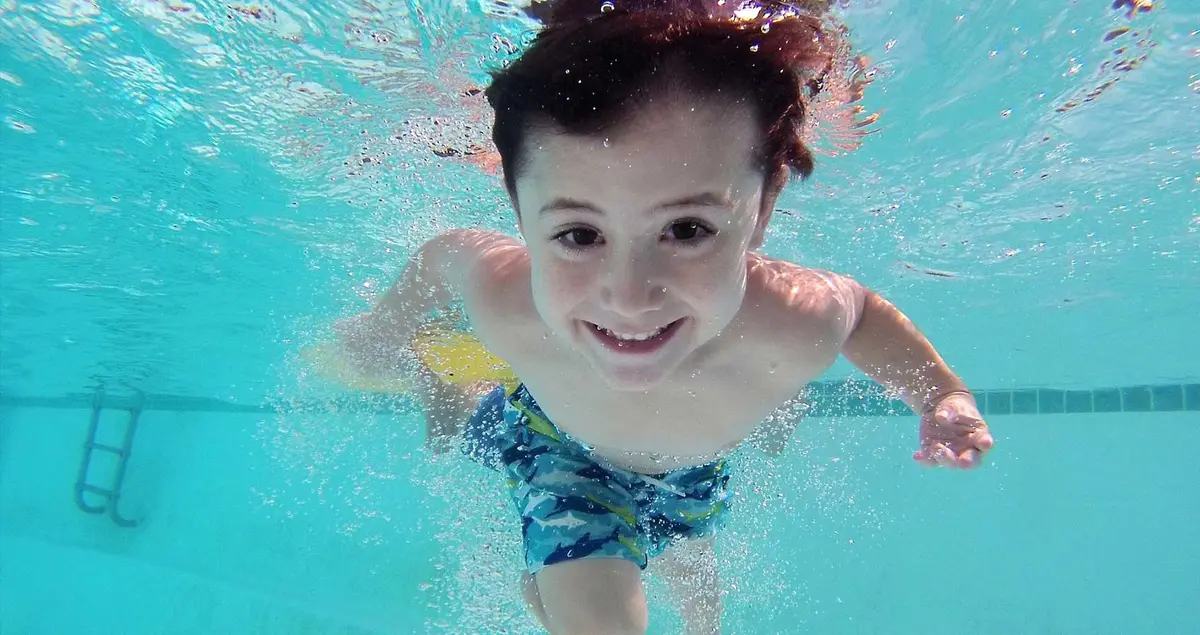
Local Swim Schools #1
All it takes is learning how to doggy paddle to the side and stay floating — and a child's life can be saved. We strongly recommend enrolling children in swim lessons before your pool is installed. Drowning prevention starts with water safety education. Here are trusted local swim schools in the Fort Worth area:
Pool Barrier & Fencing Requirements
Texas Pool Codes — State Requirements
Under Chapter 757 of the Texas Health and Safety Code, all homeowners with swimming pools must maintain pool barrier fencing and gates that meet state-mandated criteria. Note that individual cities may have additional pool fencing requirements beyond these minimums.
- Pool fences must be at least 48 inches (4 feet) tall, measured from the ground on the side facing away from the pool.
- Gaps in or under the fence must be too small for a 4-inch spherical object to pass through.
- New pool enclosures may not be constructed of chain-link fencing in Texas.
- Wood fences with horizontal and vertical members must place the horizontal cross-pieces on the pool side to prevent climbing from the outside.
Gates & Latches
- Gates must be self-closing and self-latching, opening outward away from the pool.
- The latch mechanism must be installed in the top one-fourth of the pool side of the gate.
- Gates must be lockable by padlock, combination lock, or built-in keyed/card-operated lock.
- For residential pools, the latch release must be at least 54 inches above the finished floor.
ISPSC Model Code
The International Swimming Pool and Spa Code (ISPSC) provides additional model guidelines. Where chain-link fencing is permitted, the maximum opening size is 1¾ inches. The ISPSC also includes provisions to prevent barriers from being used for climbing.
Pool Door & Window Alarms
When a wall of your home serves as part of the pool barrier, any doors, gates, or operable windows with a sill height less than 48 inches above the finished floor must have a water hazard entrance alarm.
- Alarms must produce an audible warning when the door, window, or screen is opened.
- The alarm must be a listed and labeled water hazard entrance alarm in compliance with UL 2017.
- Deactivation switches must be located at least 54 inches above the floor (standard dwellings) to prevent child access.
- Accessible units require switches between 48 and 54 inches above the floor.
Alternative Protections
- A safety cover listed and labeled per ASTM F1346 may be used instead of pool alarms.
- Self-closing doors with self-latching devices providing equivalent protection are also acceptable.
22 Essential Pool Safety Guidelines
- Teach all children to swim before your pool is installed. This is the #1 rule for drowning prevention. Remember: formal lessons do not make a child "drown-proof."
- No child should ever be in the pool area without constant adult supervision.
- Use the buddy system — no one should swim alone.
- Anyone who appears intoxicated or under the influence should not be permitted to swim.
- The pool gate must remain locked when not under adult supervision.
- Never make assumptions. When guests come over, always ask: "Do you know how to swim?"
- The pool area must be properly lit when used after dusk.
- Survey the pool area for potential hazards before entering.
- Store all pool chemicals safely per manufacturer instructions, away from children.
- All electrical devices in the pool area must be protected by a GFCI (Ground Fault Circuit Interrupter).
- If your pool changes depth, keep the transition rope in place as a warning to swimmers.
- All users — family and guests — should be familiar with pool safety rules before entering.
- Anyone using a diving board should be familiar with all manufacturer safety instructions.
- All pool drains must be properly covered. If any drain cover is broken or missing, close the pool immediately.
- Keep a first-aid kit accessible in the pool area at all times.
- Enter the pool feet first. A pool without a diving board is a non-diving pool — no headfirst entry.
- No one should stand on or play near a pool cover.
- Keep the pool and surrounding area clean, maintained, and sanitary.
- Keep emergency phone numbers posted and a phone accessible in the pool area.
- No running or horseplay in or near the pool area.
- Keep safety equipment nearby: a flotation device, a life buoy with rope, and a shepherd's hook or reaching pole.
- No one should climb on or jump from rock boulders, waterfalls, or structures not intended for pool entry.
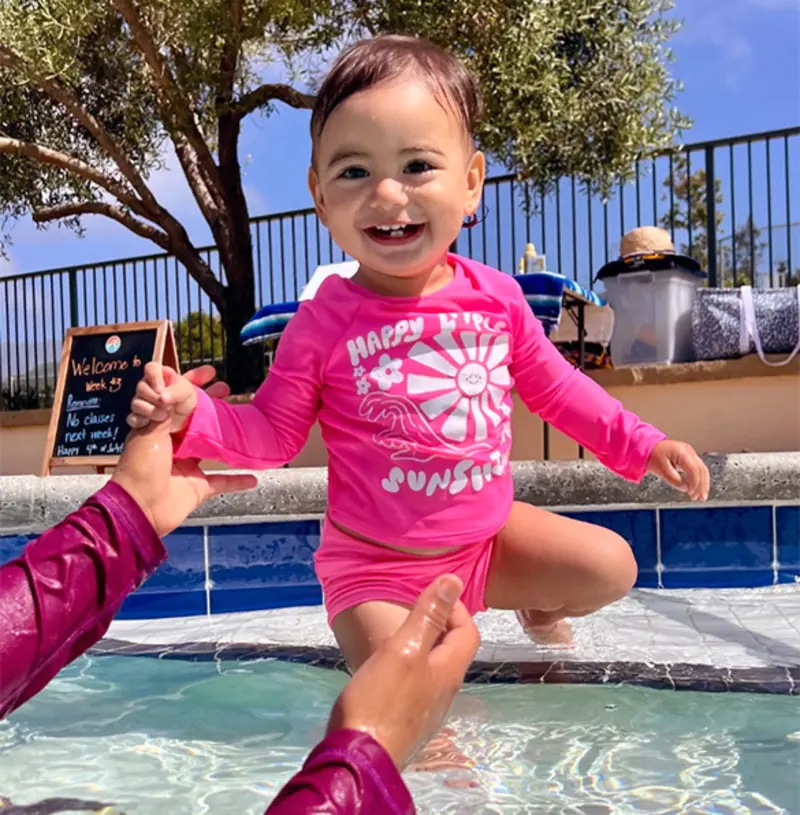


Questions parents ask
What does Texas require around a residential pool?
How tall does a pool fence have to be in Texas?
At least 48 inches (4 feet), measured on the side facing away from the pool, under Chapter 757 of the Texas Health and Safety Code. Gaps in or under the fence must stop a 4-inch sphere, new enclosures may not be chain-link, and on wood fences the horizontal rails go on the pool side so a child cannot climb from outside. Many Dallas–Fort Worth cities add requirements on top of the state minimums.
What does the pool gate have to do?
Self-close and self-latch, swing outward away from the pool, and be lockable with a padlock, combination lock or keyed lock. On a residential pool the latch release sits at least 54 inches above the finished floor, in the top one-fourth of the gate on the pool side.
Do I need door alarms if my house is part of the pool barrier?
Yes. Any door, gate or operable window with a sill under 48 inches that opens to the pool needs a listed water-hazard entrance alarm (UL 2017) with its deactivation switch at least 54 inches above the floor. A safety cover listed to ASTM F1346, or a self-closing, self-latching door, is an accepted alternative.
Do your pool plans include the fence and gates?
The barrier itself is usually built by a fence contractor or the homeowner, so it is not drawn as a design item — but every plan set carries the requirement as a note: barrier, enclosure and gate per 2021 ISPSC Section 305, self-closing, self-latching, swinging away from the pool to meet the county or city enclosure rules; exit alarms on every door with direct access to the pool, listed to UL 2017, switch 54 inches or more above the threshold, certified to ASTM F2208; and glazing at least 60 inches from the water per IRC R308.4.5. The reviewer sees it, the builder sees it, the homeowner signs it.
When should my child start swim lessons?
Before the pool is installed. The first rule on this page's list of 22 is teach every child to swim first — even a doggy paddle to the side and staying afloat can save a life. Formal lessons do not make a child drown-proof, so constant adult supervision and a locked gate still apply. Four Fort Worth-area swim schools are listed above.
Which age group is most at risk around a pool?
Children ages 1 to 4 have the highest drowning rate of any age group, and roughly 4,000 unintentional drowning deaths occur in the U.S. each year. That is why the barrier, gate and alarm rules on this page exist, and why this page is dedicated to Paxton.
Design With Safety First
When swimming pools are involved in the design process, a child's safety is my number one concern
Call (940) 433-4333